


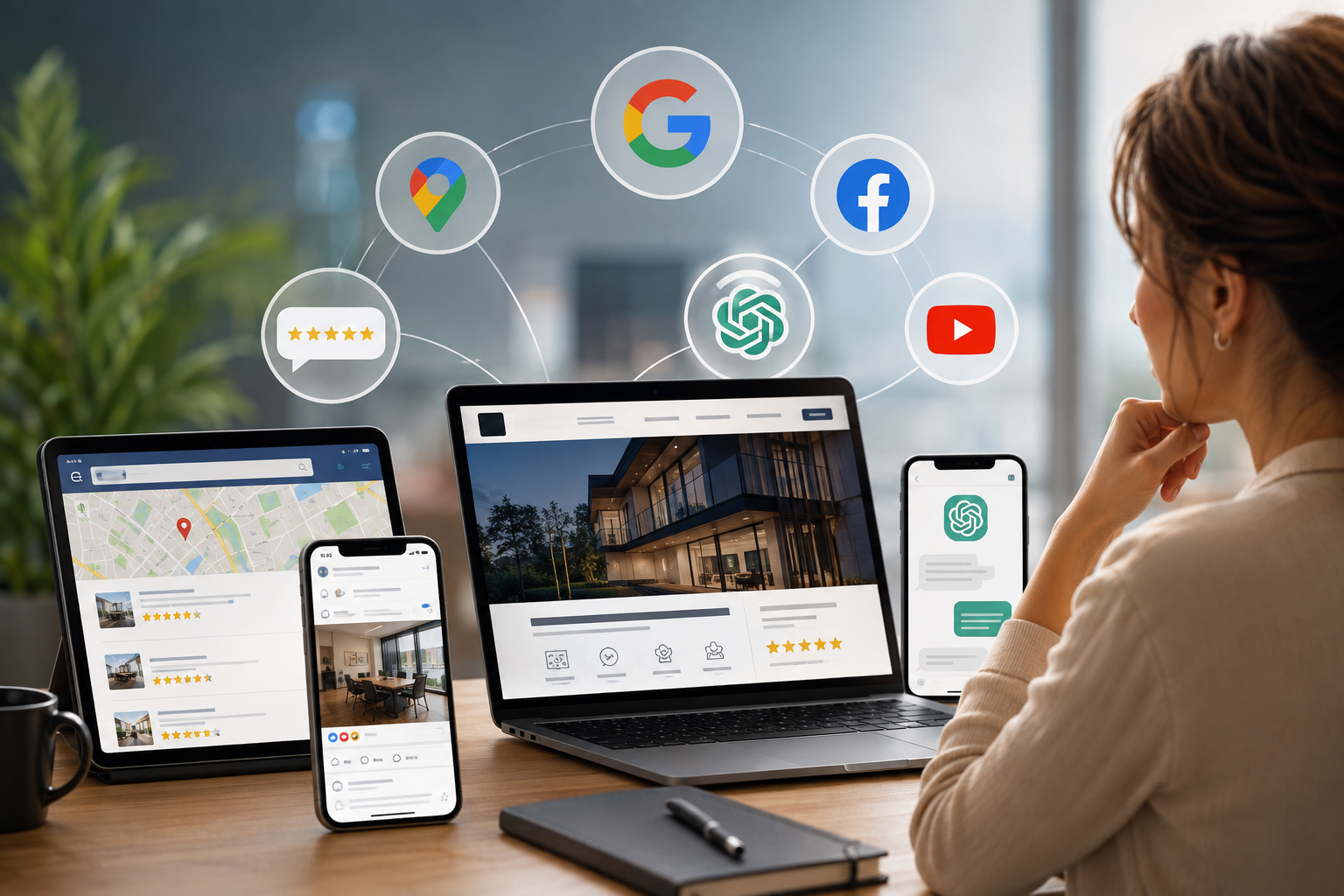
For years, SEO agencies have relied on keyword rankings as the primary way to show success. It made sense. If your business moved from page three to page one—or from #8 to #2—it was an easy metric to understand and report. But the way people discover businesses has changed. After reading the recent Search Engine Land article, "Your Rankings Aren't Telling You What Your Customers See," we agree with its overall message: rankings are no longer the complete picture of SEO success. At Infinite Web Co., we've been telling clients the same thing for quite some time. SEO Is No Longer Just About Google Rankings Today's customers don't just search Google and click the first blue link. They might: Search Google. Read Google Reviews. Ask ChatGPT. Search Facebook Groups for recommendations. Watch videos on YouTube. Look on Instagram or TikTok. Use Google Maps. Ask friends or coworkers. Every one of those touchpoints influences whether someone chooses your business. The challenge? There isn't a software platform today that accurately measures your visibility across every place customers discover businesses. Traditional rank trackers only measure a small piece of the customer journey. So... How Do You Know If SEO Is Working? We understand. SEO isn't inexpensive, and business owners deserve to know their investment is paying off. Instead of asking: "Did I move from #4 to #2?" Ask questions like: Are we getting more phone calls? Are more people submitting contact forms? Are customers saying they found us on Google? Are people mentioning they found us through ChatGPT or AI? Are referrals from Facebook Groups increasing? Are more people asking specifically for our company? Is our Google Business Profile receiving more calls, direction requests, and website visits? Those are the metrics that actually grow a business. We've Seen Businesses Rank #5 and Outperform #1 This surprises many business owners. Ranking first does not automatically mean you'll get the most customers. We've seen businesses ranked second, third, fourth, even fifth, generate more leads than the business sitting in the number one position. Why? Because customers don't make decisions based solely on rankings anymore. They compare. They research. They evaluate. Before contacting a business, they often look at: Reviews Website quality Photos Pricing information Services offered Experience Certifications Response times Trustworthiness If your competitor provides a better overall experience, many customers will choose them—even if you ranked above them. Your Website Now Has One Job: Earn Trust Getting someone to your website is only half the battle. Your website has to convince them you're the right company. Google has repeatedly emphasized creating helpful, people-first content and rewarding pages that provide a strong user experience, while SEO experts increasingly recommend designing every important page like a landing page because visitors often enter through service pages rather than the homepage. The businesses winning today typically include: Clear explanations Don't make visitors guess what you do. Explain your services in plain English. Real reviews Customers trust other customers. Show authentic reviews throughout your website—not just on a testimonials page. Before & After photos or Portfolio Show your work. People want proof. Frequently Asked Questions Answer the exact questions people ask before they call. This also helps with AI search and local SEO. Team Information Show who's behind the business. Real faces build confidence. Case Studies & Results Instead of saying you're the best... Show the results you've achieved. Trust Signals Include things like: Years in business Certifications Awards Associations Guarantees Warranties Licenses Insurance Easy Ways to Contact You If people have to hunt for your phone number or contact form... You've already lost potential customers. SEO Today Is About Visibility, Trust & Conversions The goal isn't simply to rank. The goal is to be the business people choose. That means being visible across multiple platforms, creating content that genuinely answers customer questions, building trust through reviews and proof, and having a website that makes visitors feel confident enough to contact you. That's what modern SEO looks like. The Bottom Line Rankings still matter. They're just no longer the finish line. A first-place ranking without calls doesn't grow a business. A third-place ranking that consistently generates leads, appointments, and revenue is far more valuable. As search evolves with AI, Google, Maps, social platforms, and conversational search, businesses need to stop obsessing over rankings alone and start focusing on what really matters: Being found. Being trusted. Being chosen. At Infinite Web Co., that's the strategy we build for every client. Because at the end of the day, rankings don't pay the bills—new customers do.

Discover why SEO for accountants is essential in 2026. Learn why relying on referrals limits your growth and how to attract high-value leads online.